
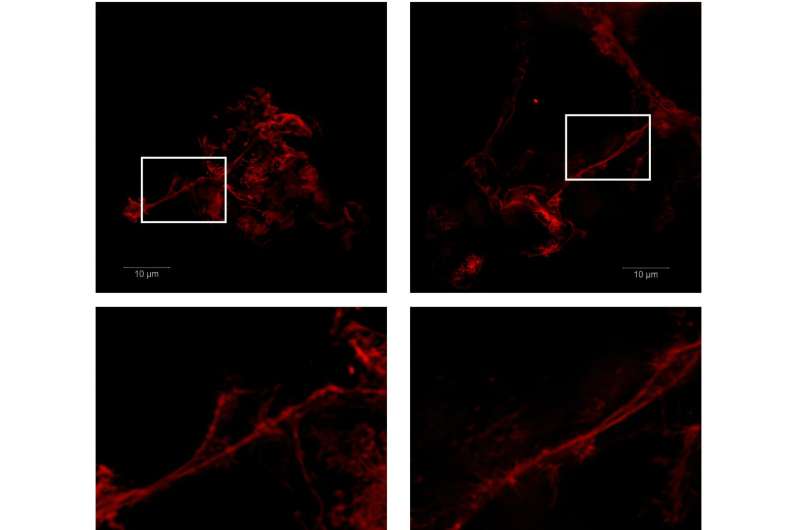
“Most studies suggest that microglia are there to clean up the brain and remove the amyloid plaques. What we discovered is that actually they’re part of the problem. They generate plaques,” says Prof. Joost Schymkowitz, co-senior author of the study at the VIB-KU Leuven Center for Neuroscience. “It was thought that plaques aggregate by themselves. And it seems that the microglia, by trying to deal with the problem, amplify it.”
Alzheimer’s disease affects nearly 55 million people worldwide and is characterized by the accumulation of toxic protein aggregates in the brain known as amyloid plaques. These plaques are associated with neuronal death and progressive dementia. The brain’s microglia have been hailed as protectors against plaque accumulation in the disease, being the focus of several therapies. Nonetheless, the study shows how microglia are active producers of amyloid plaques in the earlier stages of the disease, reconsidering the therapeutic paradigm for Alzheimer’s.