
Scientists looking for the causes of neurodegenerative diseases like Parkinson’s and Alzheimer’s generally focus on the buildup of aberrant proteins in the brain that impede normal neural connections.
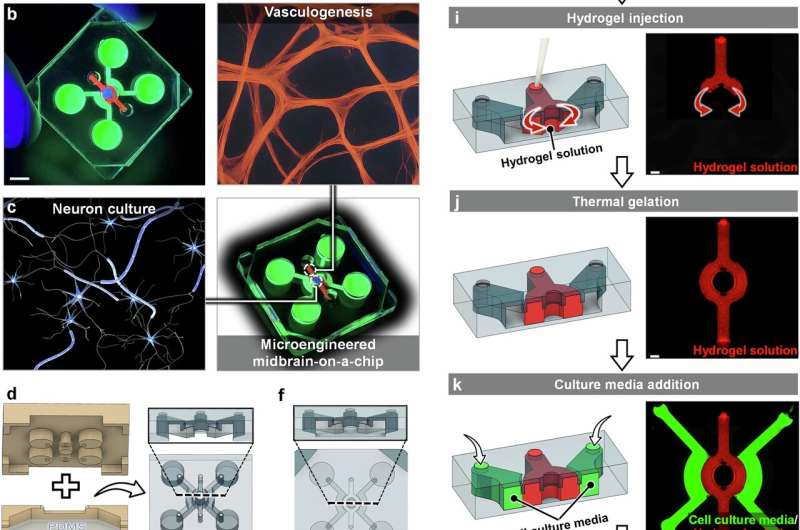
Assistant Professor Jungwook “Jay” Paek and Ph.D. student Anika Alim from the Thomas J. Watson College of Engineering and Applied Science’s Department of Electrical and Computer Engineering used organ-on-a-chip technology to mimic how cells behave inside the human body.
For this latest paper published in Communications Engineering, Paek, Alim, Drexel Assistant Professor Myungwoon Lee, and Ph.D. student Yoongyeong Baek take an engineering approach to examine how the blood-brain barrier degrades as Parkinson’s progresses.