
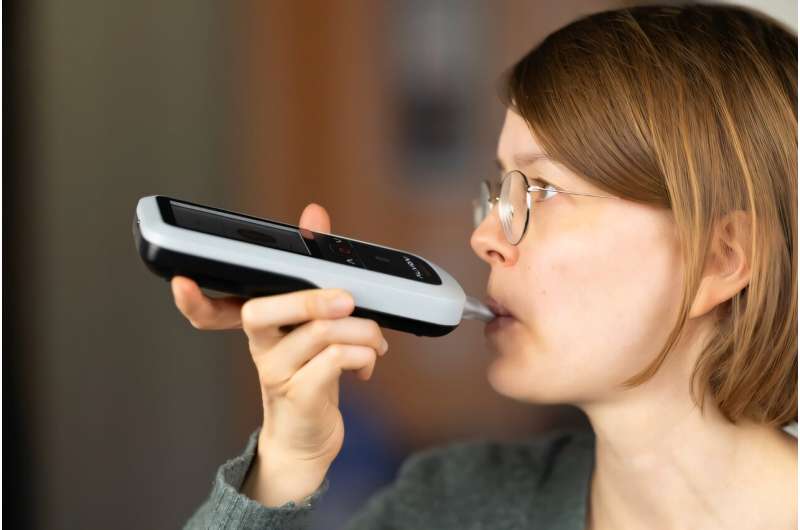
The technology could help people monitor their metabolism and allow clinicians to personalize treatments for obesity, diabetes, epilepsy, and other metabolic conditions.
Scientists have long used breath acetone as a window into metabolism because its concentration rises as the body shifts from using carbohydrates to fat. But doing so typically requires bulky laboratory instruments or consumer devices that work reliably only at very high acetone levels.
“If we want to make that information available to patients, we need to shrink those technologies into compact, user-friendly devices,” says senior author Andreas Güntner of ETH Zurich. After 10 years of engineering, the team finally built a portable, highly sensitive breath acetone detector for everyday use.