
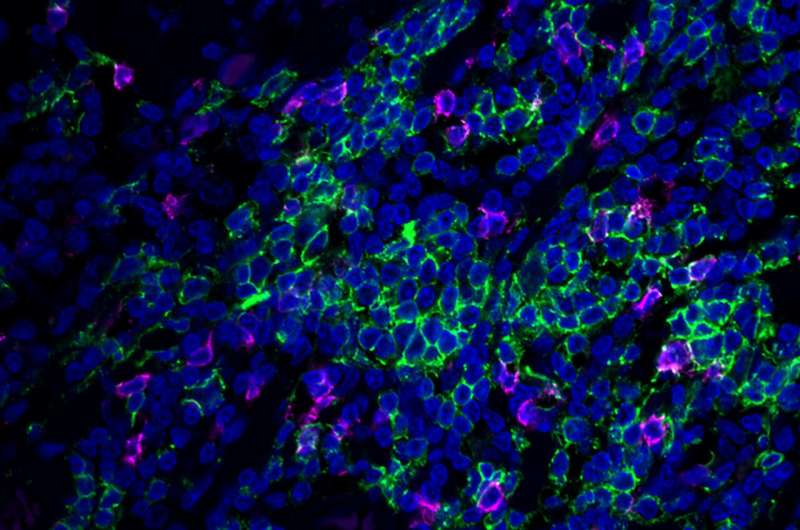
Yet not all patients benefit from standard-of-care T cell immunotherapies. Salk Institute scientist Daniel Hollern wants to change that—and he thinks B cells offer new pathways to enhance the immune system’s attack on cancer cells. Hollern’s lab is working to close the research gap that has shrouded B cells in mystery and prevented them from reaching their full clinical potential.
His latest study, published in Cell Reports, reveals that B cells play a multifaceted role in promoting T cell antitumor activity.
The study is the first to show that B cells can regulate killer T cell function, prompting a slew of new questions about how these interactions work. The insights lay the foundation for harnessing B cells in immunotherapy, which has the potential to radically change the future of cancer care.