
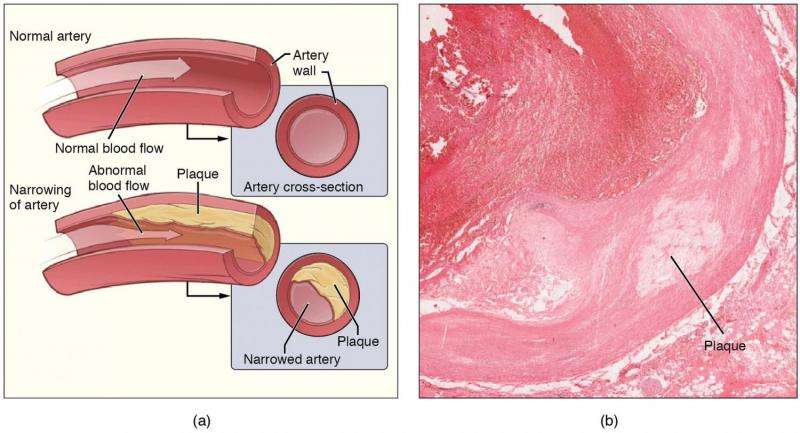
In a study published in Proceedings of the National Academy of Sciences, Schwartz’s team, led by associate research scientist Divyesh Joshi, Ph.D., found that a protein complex called Polycomb Repressive Complex 2 (PRC2) is associated with disturbed blood flow and inhibits anti-inflammatory mechanisms in the arteries that mitigate atherosclerosis.
By blocking PRC2, the team successfully reduced harmful plaque in animal models of the disease.
“By inhibiting PRC2, we boost protective pathways that reduce inflammation and could protect people from plaque rupture in atherosclerosis,” Schwartz says.