
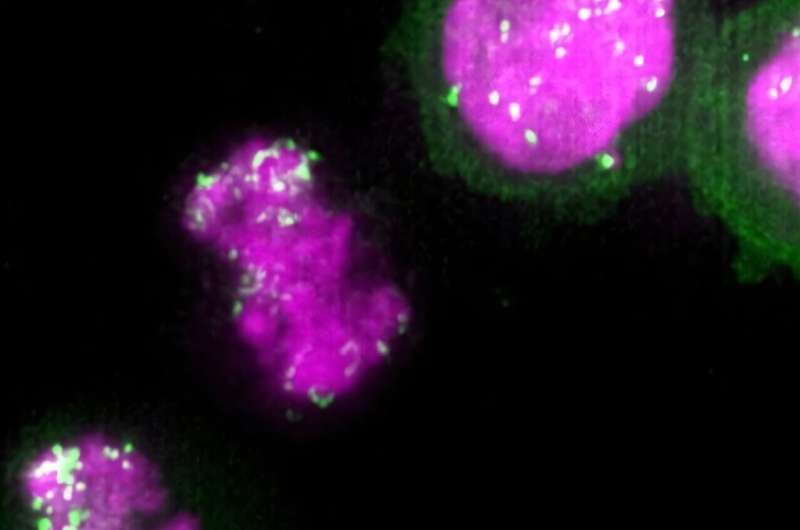
These circles, known as extrachromosomal or ecDNA, are major drivers in human cancers. Blocking their ability to associate with chromosomes causes the loss of the circles during cell division and the death of lab-grown cancer cells. Targeting this weak link in the circles’ proliferation could lead to new classes of cancer therapies, the researchers predict.
“Unfortunately, ecDNAs have developed a crafty mechanism that allows them to wreak havoc on human health,” said professor of pathology Paul Mischel, MD. “They are using nature’s own method of gene expression and cell fate to ensure they are safely distributed into the next generation of cells and not lost into the cytoplasm or extracellular space when a cell divides.”
Mischel leads an international team of experts known as eDyNAmiC to learn more about the circles. Mischel, who holds the Fortinet Founders Professorship, and Howard Chang, MD, Ph.D., professor of dermatology, genetics and pathology who is the Virginia and D.K. Ludwig Professor in Cancer Research, are co-senior authors of the paper that was published on Nov. 19 in Nature.