
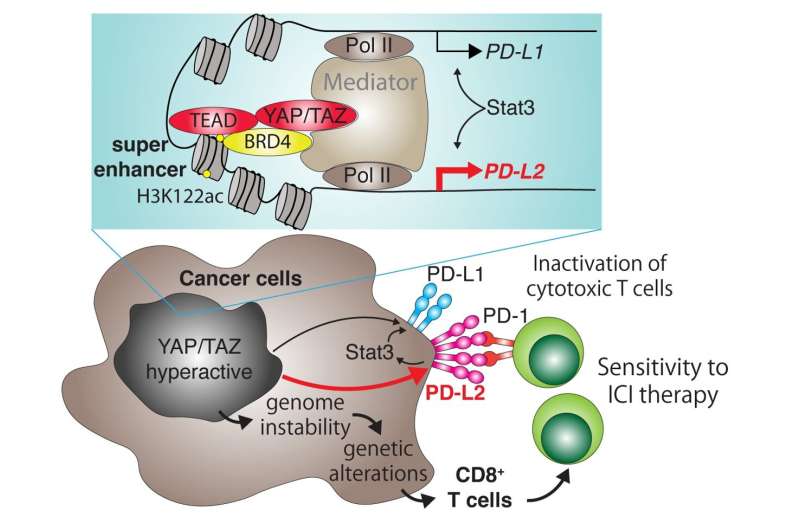
That combination could matter for immune checkpoint inhibitor (ICI) therapy, which can block inhibitory signals that restrain T-cell activity. If genomic instability makes a tumor more likely to be recognized by the immune system while PD-L2 helps suppress the T cells that recognize it, blocking such inhibitory signaling could leave the tumor more vulnerable to immune attack.
The researchers propose that this may help explain why tumors with certain Hippo pathway alterations were associated with better outcomes in a separate analysis of 1,662 patients treated with ICIs.