
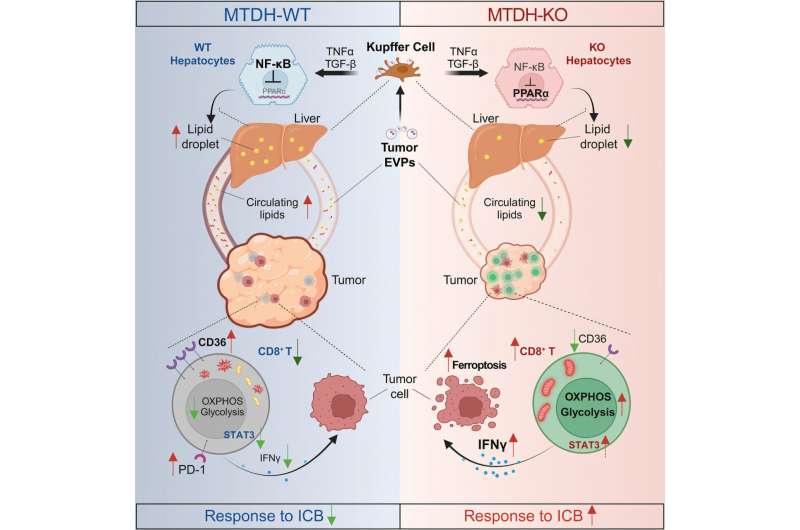
A study led by Ludwig Princeton’s Yibin Kang and Yong Tang now adds a new dimension to this emerging portrait of the tumor in its context. Reported in Cell Metabolism, its findings reveal how tumors reach out across the body and tweak physiological processes governed by a distant organ to indirectly shield themselves from immune attack.
“Our study adds to the growing body of evidence showing how cancer can act as a systemic disease by establishing lines of communication between its tumors and distant, noncancerous organs,” said Kang. “We found that small particles released by tumors reprogram fat metabolism in the liver to further undermine the function of CD8+ T cells, the primary antitumor forces of the immune system.”