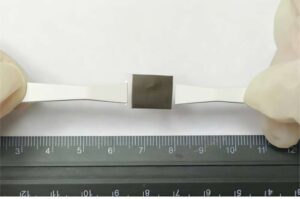
A patch that sticks inside your mouth could spot inflammation early
The specialized sensing layer of the patch targets the tumor necrosis factor-alpha (TNF-⍺) protein, a key biomarker for inflammation.

The specialized sensing layer of the patch targets the tumor necrosis factor-alpha (TNF-⍺) protein, a key biomarker for inflammation.

Winning approval to target the 15,000 U.S. patients with locally advanced pancreatic cancer is the first step in a broader expansion in the tumor type.

GALWAY, Ireland, Feb. 13, 2026 /PRNewswire/ — InVera Medical, an Irish medical technology company, has received European regulatory approval for a new minimally invasive device designed to help physicians deliver treatment more effectively to diseased leg veins, including varicose veins.

TAICHUNG, Feb. 13, 2026 /PRNewswire/ — Cancer has long ranked among the leading causes of death in Taiwan, and solid tumors account for more than 90% of cancer cases worldwide—making them the most challenging frontier for CAR-T cell therapy. China Medical University Hospital (CMUH) announced today that, in collaboration with Ever Supreme Bio Technology, it has successfully developed the world’s first EXO 001 targeted exosome platform, a breakthrough technology that enables direct in vivo programming of T cells to generate multi-target nanobody-based CAR-T cells.

New techniques to detect Y chromosome genes show frequent loss of the Y in tissues of older men.

Encora Therapeutics announced today that it received FDA 510(k) clearance for its Encora X1 device.

Novocure (Nasdaq:NVCR) announced that the FDA granted approval for its Optune Pax treatment for advanced pancreatic cancer.

A multidisciplinary study led by the Centro Nacional de Investigaciones Cardiovasculares Carlos III (CNIC) and published in Circulation Research provides a new perspective on why this arrhythmia can persist long-term, highlighting the key role of non-contractile cardiac cells.

A new MRI technique called Velocity Spectrum Imaging can map fluid movement in the human brain within a 3D pixel.

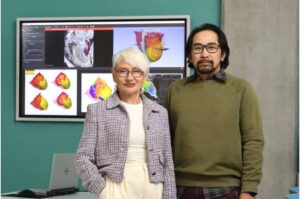
With a new MRI technique that shows both heart tissue and blood flow simultaneously, physicians can see where heart defects occur and precisely plan to repair them, according to new research.