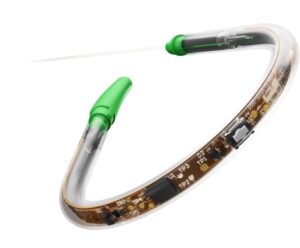
FDA clears Bright Uro’s abdominal sensor for evaluating bladder dysfunction
The approval of Bright Uro’s Glean abdominal sensor advances the capabilities of its broader Glean urodynamics system that gained FDA approval in March 2025.

The approval of Bright Uro’s Glean abdominal sensor advances the capabilities of its broader Glean urodynamics system that gained FDA approval in March 2025.

With FDA clearance in hand, Rivanna highlighted that it will accelerate the development of further AI capabilities for the Accuro XV system.

A research group led by Professor Dr. Dietmar Fischer from the Institute of Pharmacology II at University Hospital Cologne is therefore pursuing a new approach to treating such contusion injuries.

Researchers assessed whether a blood-based 3-gene host-response test can detect active tuberculosis and help predict future disease.

Researchers at McGill University and the Research Institute of the McGill University Health Center (RI-MUHC) have developed a novel device to transplant insulin-producing cells that integrates directly with existing blood vessels in the body.

Inflammatory bowel disease (IBD), affecting an estimated 6–8 million people worldwide, may soon be monitored with a simple stool test instead of invasive procedures.

A higher dietary intake of soy and legumes is linked to a lower risk of high blood pressure, finds a pooled data analysis of the available evidence, published in the open access journal BMJ Nutrition Prevention & Health.

FORT LAUDERDALE, Fla., May 7, 2026 /PRNewswire/ — Spinal Resources, Inc., a developer of advanced spinal stabilization technologies, today announced the issuance of U.S. Patent No. 12,611,231, “Spinal Rod and Systems Thereof”.

Microsure announced today that it received CE mark approval for its MUSA-3 surgical robot and named Alex Joseph as CEO.

In a finding that challenges decades of assumptions about blood cancer, an international research team has shown for the first time that a specific subtype of diffuse large B cell lymphoma (DLBCL), which is the most common blood cancer in adults, is dramatically more lethal in women than in men.