Rhythio wins FDA breakthrough nod for injectable electrode tech for defibrillation
Rhythio Medical announced today that it received FDA breakthrough device designation for its Injectable Electrode System.

Rhythio Medical announced today that it received FDA breakthrough device designation for its Injectable Electrode System.

Enabled by a new high-resolution mapping technique, the findings overturn a long-held belief that the genome loses its 3D structure when cells divide.

In addition to linguistic prompts, large language models can also understand, interpret, and adapt their responses to heart frequency data. Dr. Morris Gellisch, previously of Ruhr University Bochum, Germany, and now at University of Zurich, Switzerland, and Boris Burr from Ruhr University Bochum have developed a technical interface through which the physiological data can be transmitted to the language model in real time.

Researchers from Edith Cowan University (ECU) have developed an innovative new way to measure biological age, which could make it easier to detect and track age-related conditions.

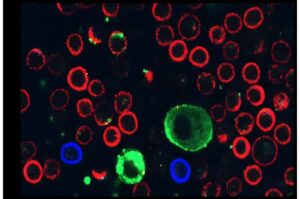
When cancer spreads, tiny amounts of cells can break away from tumors and circulate in the bloodstream. A liquid biopsy is a means to detect the presence of cancer by detecting these cancer cells floating in blood samples. However, current state-of-the-art methods have necessitated trained specialists to comb through and review images of thousands of cells out of potentially millions of cells on a slide over a period of many hours.

The initiative is set to continue until the end of 2025, with backing from Google.org.

Learn more about the new biological computer that fuses brain cells and computer chips — and uses far less energy. Cortical Labs, a startup based in Australia, has developed what it describes as a “code-deployable biological computer.” Called CL1, the technology is a type of synthetic biological intelligence consisting of a combination of real neural networks and computer chips.

REHOVOT, Israel, Oct. 16, 2025 /PRNewswire/ — CollPlant Biotechnologies (NASDAQ: CLGN), a regenerative and aesthetic medicine company developing disruptive technologies and products based on its proprietary, non-animal recombinant human collagen (rhCollagen), today announced that, according to a scientific article published in the Archives of Dermatological Research, researchers from Mayo Clinic have developed the first fully humanized 3D bioprinted skin model using CollPlant’s plant-derived rhCollagen.

The rapid progression of an aging society has led to a sharp rise in patients with neurodegenerative diseases such as dementia and Parkinson’s disease, making it a critical issue in health care and welfare.

Orthodontic treatment is most effective when timed to coincide with a child’s growth peak. Traditionally, clinicians estimate growth by examining X-ray images of the cervical vertebrae—the neck bones visible in routine dental radiographs. However, this process requires careful manual annotation of specific points on the bones, a task that is both time-consuming and prone to variation between observers.