The largest medtech funding rounds of 2025
As another year winds down, it’s safe to say that investment in medtech is not stopping any time soon.

As another year winds down, it’s safe to say that investment in medtech is not stopping any time soon.

What if we could watch blood move through an entire organ in real time?

One of the most challenging moments in cancer treatment comes when a therapy stops working. In many metastatic cancers, drugs that are initially effective lose their potency over time, as malignant cells acquire mutations that enable them to survive and spread.

A newly developed artificial intelligence (AI) model is highly accurate in predicting blood loss in patients undergoing high-volume liposuction, reports a study in the Plastic and Reconstructive Surgery journal.

Now, a research team from University Hospitals, Case Western Reserve University, and the Louis Stokes Cleveland VA Medical Center has challenged this long-held dogma in the field. They tested whether brains already badly afflicted with advanced AD could recover.

MannKind (Nasdaq:MNKD) announced today that the FDA approved its Furoscix (furosemide) on-body infusor for pediatric patients.

A new method could enable users to design portable medical devices, like a splint, that can be rapidly converted from flat panels to a 3D object without any tools.

Edwards Lifesciences (NYSE: EW)+
has won FDA approval for its Sapien M3 mitral valve replacement system for treating mitral regurgitation (MR).

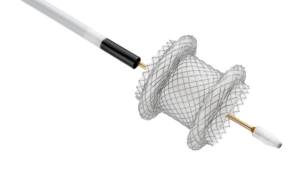
Shape Memory Medical’s IMPEDE embolisation plug range has received CE mark as a Class III device under the European Union’s Medical Device Regulation (EU MDR).

A multicenter study led by UC Davis Health has tested a new treatment designed to improve care for people with a rare liver disease called primary sclerosing cholangitis. Researchers learned that an anti-inflammatory and anti-fibrotic monoclonal antibody known as nebokitug was safe and showed potential efficacy in patients with PSC.