
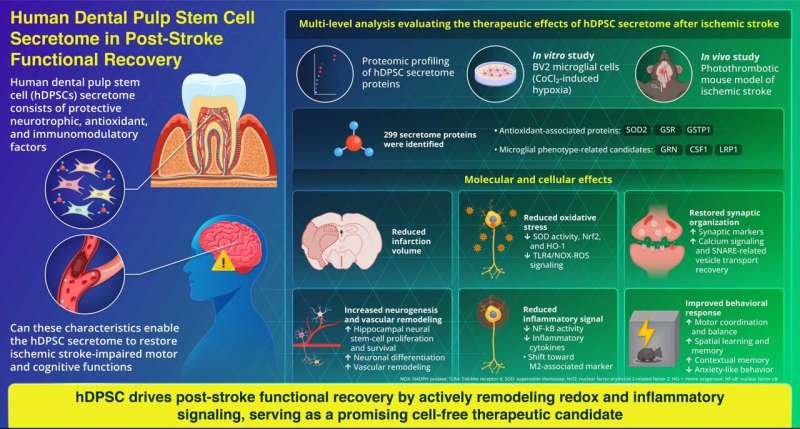
The human dental pulp stem cell (hDPSC) secretome contains extracellular vesicles, growth factors, antioxidant enzymes and immunomodulatory proteins and may offer a cell-free therapeutic approach. However, understanding of its therapeutic impact on delayed neuronal injury after reperfusion is limited.
A study led by professor Won-Jae Kim from the Stem Cell Secretome Research Center, Department of Oral Physiology, School of Dentistry, Chonnam National University, South Korea, investigated whether the hDPSC secretome could improve functional recovery in a photothrombotic mouse model and examined the biological processes associated with its effects.