
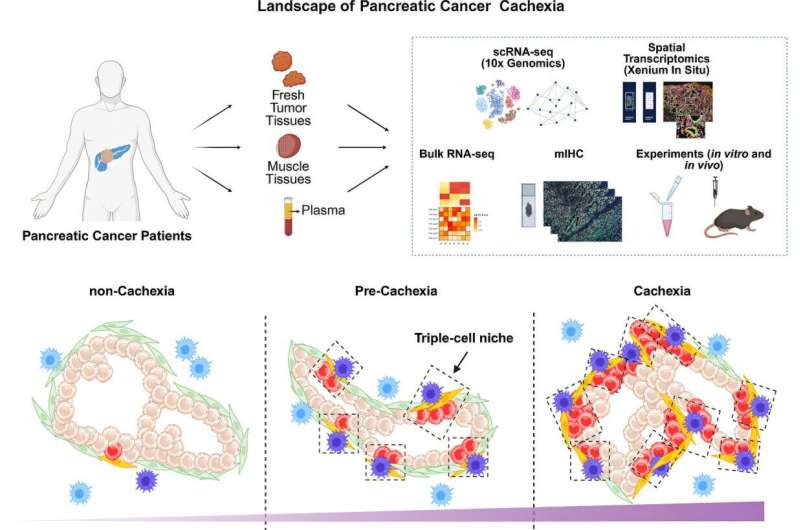
Together, the three subclusters form a triangular regulatory network, working in a feed-forward loop to drive the initiation and progression of cachexia.
“These are the players that are driving cachexia in pancreatic cancer patients. We successfully identified and isolated these small cell clusters from each cell type in the tumor microenvironment. Our next steps are to develop specific strategies to target these three molecules,” said lead author Min Li, Ph.D., OU College of Medicine professor of medicine and associate director for global oncology for OU Health Stephenson Cancer Center.