
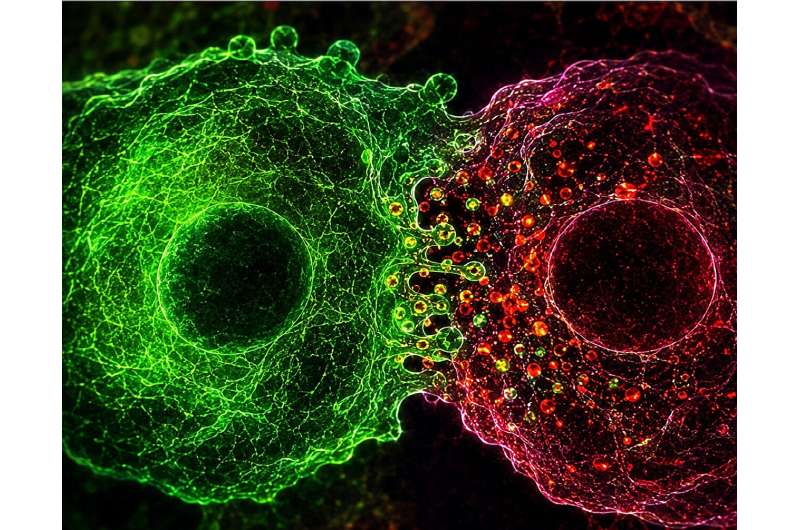
The study, published in Nature Cancer, found that ANO6 helps pancreatic cancer cells obtain nutrients from surrounding cells while suppressing the immune system’s ability to fight tumors. ANO6 enables cancer-associated fibroblasts (CAFs)—cells that make up much of the dense tissue surrounding pancreatic tumors—to transfer cholesterol and other lipids to cancer cells.
“These findings help explain how pancreatic cancer cells obtain essential nutrients despite the unusual structure of the pancreatic tumor microenvironment,” said Igor Astsaturov, M.D., Ph.D., a professor at Fox Chase and co-senior author of the study. “Cancer-associated fibroblasts are not passive bystanders. They actively support tumor growth by transferring lipids to cancer cells.”