
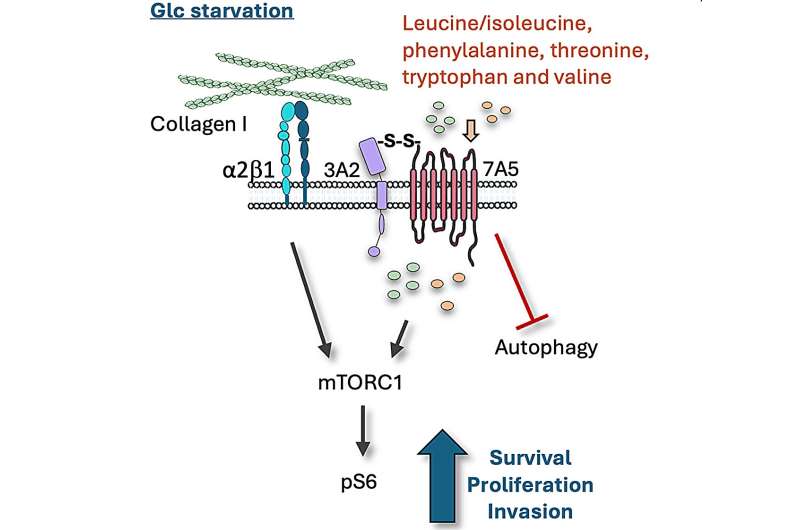
Researchers from the Sheffield Center for Cancer Research discovered that the key lies in a protein abundant throughout the human body: type I collagen. The study, published in PLOS Biology, revealed that type I collagen, a major building block of the scaffolding around tumors, helps cancer cells adapt to these challenging, nutrient-poor conditions.
In breast and pancreatic tumors, up to 90% of the mass consists of this scaffolding, known as the extracellular matrix. Typically, if you starve cancer cells of glucose—the primary source of energy for cells in the body—they die. But when this scaffold is present, the cells adapt by finding another fuel source.