
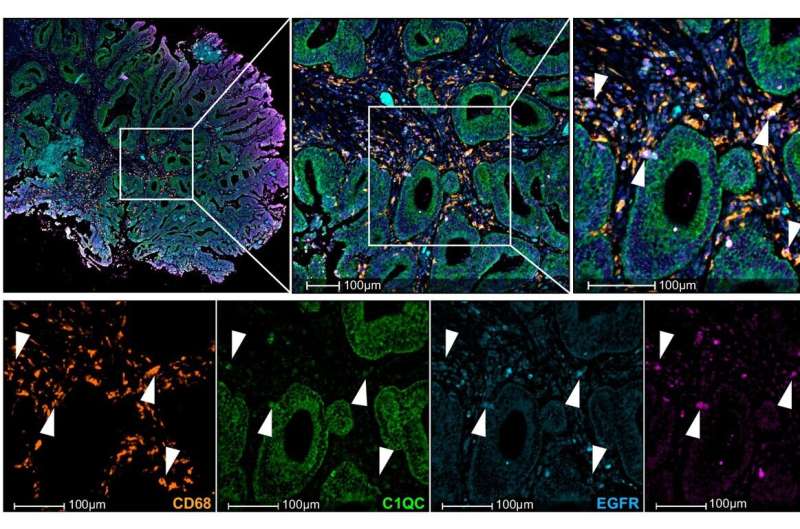
EGFR-inhibiting antibodies are already used in colorectal cancer, particularly in patients without certain KRAS mutations. However, not all patients respond sufficiently to this treatment. Furthermore, tumors can become resistant during the course of therapy. The cause of this is only partially understood.
Immune cells as a key component of the therapeutic effect
The research team led by Maria Sibilia from the Center for Cancer Research at MedUni Vienna and the Comprehensive Cancer Centre at MedUni Vienna and University Hospital Vienna has investigated the role EGFR plays in certain immune cells. The focus was on so-called myeloid cells. These include, among others, macrophages, which normally eliminate pathogens or damaged tissue in the body. However, in the vicinity of a tumor, they can also play the opposite role and promote tumor growth.