
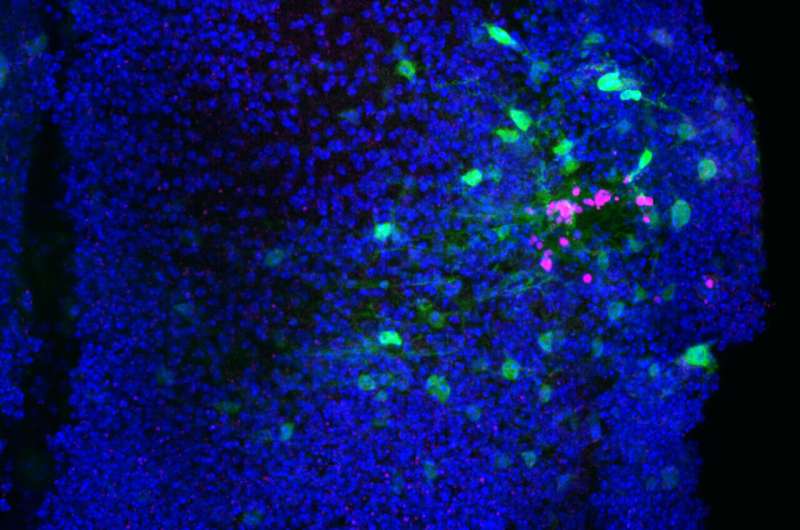
When we hear about oxidative stress in the brain, it is almost always bad news, linked to aging, Alzheimer’s and other neurodegenerative diseases. But new research in fruit flies, published in the journal EMBO Reports by a team from the Champalimaud Foundation (CF), in Lisbon, shows that a brief, well-controlled burst of oxidative stress right after an injury can actually help the brain repair itself.
In the new study, Christa Rhiner—principal investigator of the Stem Cells and Regeneration Lab at the CF—and her team show that after a small injury in the adult fly brain, a specific group of support cells, known as glia, rapidly release a pulse of chemically reactive forms of oxygen that include hydrogen peroxide. This controlled oxidative spark does two things at once: It switches on protective antioxidant processes in glia, and crucially, acts as a signal that wakes up normally quiet cells and drives them to divide and replace lost tissue.