
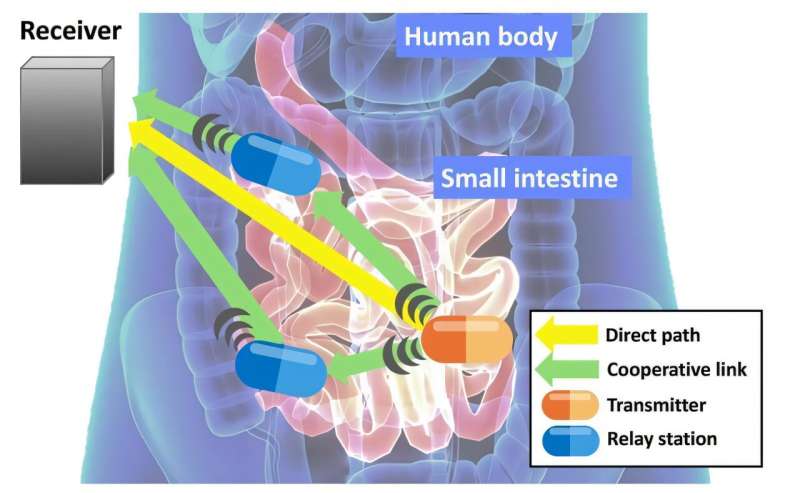
Diagnostic tests for stomach conditions are tough for patients, as many of the most accurate ones involve minor surgical procedures or invasive techniques. Swallowable medical devices have emerged as a possible solution. Complex procedures like endoscopy are replaced by a pill-sized camera, which is swallowed and transmits data about the patient’s health as it travels through the body.
However, the use of swallowable devices is complicated by the makeup of the human body. Wireless signals are made up of many frequencies, each of which gets absorbed, scattered, and distorted differently depending on whether it passes through muscle, fat, or bone. As a result, many arrive misaligned or uneven in strength.