
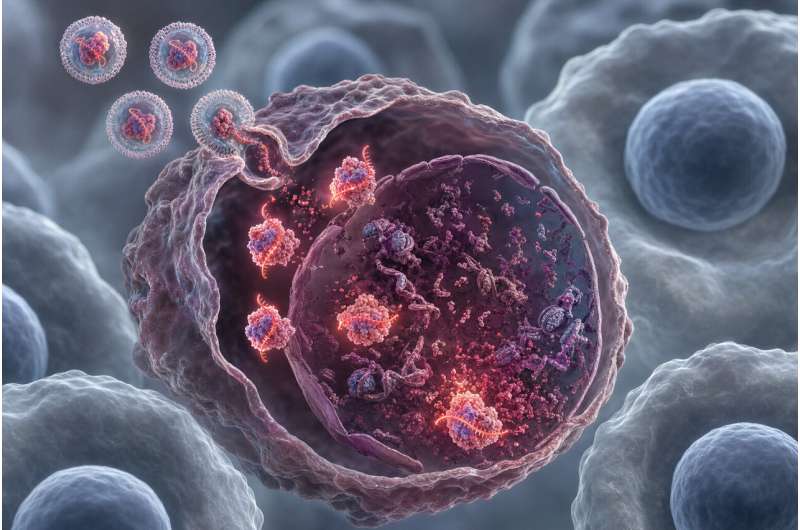
Once the enzyme detects cancer-specific genetic signatures, it begins to shred chromatin—a mixture of DNA and proteins that forms chromosomes—within the targeted cell.
Many cancers are driven by mutations in tumor suppressor proteins such as TP53, which is altered in nearly half of all cases. Yet these mutations have remained difficult to treat because they lack binding pockets for traditional drugs to latch onto. As a result, many cancer-causing mutations have long been considered undruggable.