
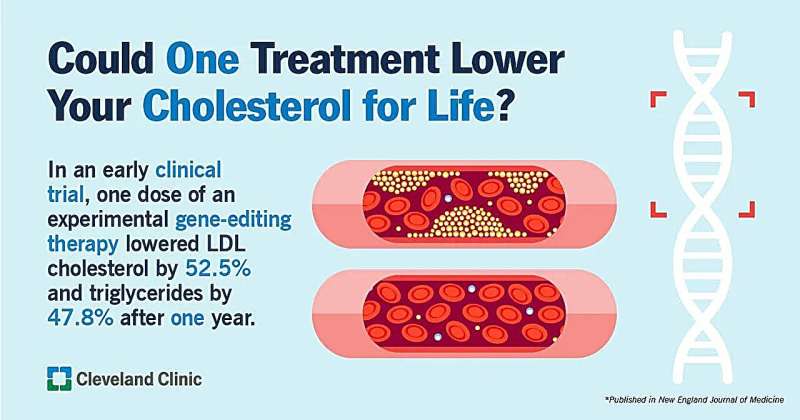
The Phase I trial, which included 15 patients, aimed to see if the reductions in LDL cholesterol and triglycerides previously reported after two months would persist for 12 months. After 12 months, patients treated with the highest dose saw a 52.5% reduction from baseline in LDL cholesterol and a 47.8% reduction in triglycerides. There were no serious adverse events related to the therapy during the one-year follow-up.
The trial results were presented at the 2026 European Society of Cardiology annual meeting and simultaneously published in the New England Journal of Medicine.