
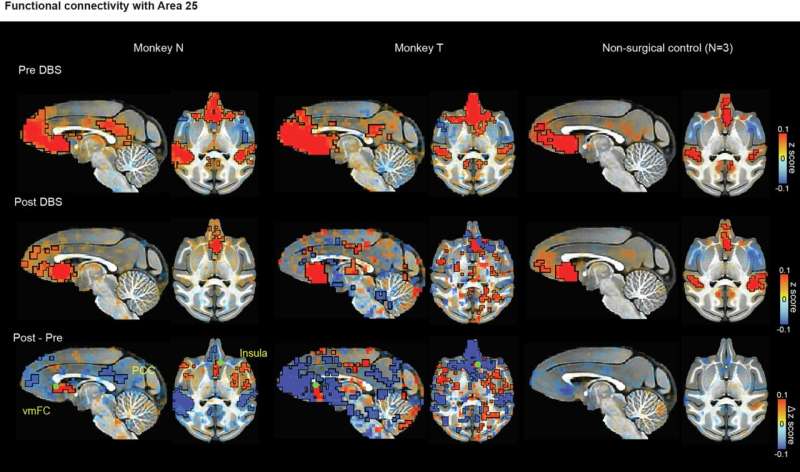
The study, published June 1 in Nature Neuroscience, provides critical insight into the biological basis of DBS, an emerging therapy for treatment-resistant depression and other neuropsychiatric disorders.
Deep brain stimulation, approved by the U.S. Food and Drug Administration to treat essential tremor, Parkinson’s disease, epilepsy, and obsessive-compulsive disorder, is a neurosurgical procedure involving placement of a neurostimulator (sometimes referred to as a “brain pacemaker”), which sends high-frequency electrical impulses through implanted electrodes deep in the brain to specific areas responsible for the symptoms of each disorder.