
Diseases can alter the composition of volatile organic compounds (VOCs) and thus body odor. These characteristic odor patterns can be detected in exhaled breath and bodily fluids—the human volatilome. However, existing analytical methods are often complex, time-consuming and require specialized personnel. As a result, rapid, simple methods suitable for widespread onsite use are lacking.
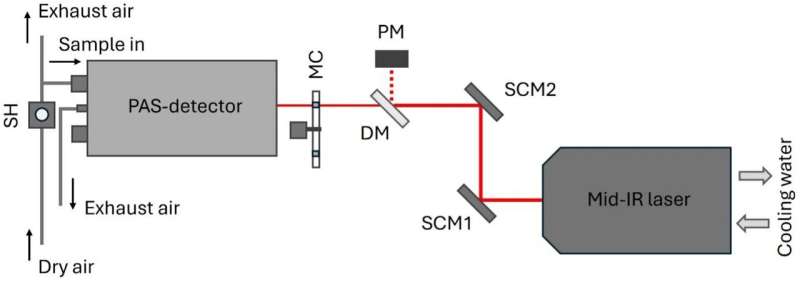
The research team from Fraunhofer IIS and TU Dresden combined a simple method for collecting samples from participants with highly sensitive laser measurement technology. Swab samples were taken from the anterior nasal cavity, the navel and the outer ear. A spectrometer then recorded the patterns of volatile compounds. The nasal swab proved particularly promising.