
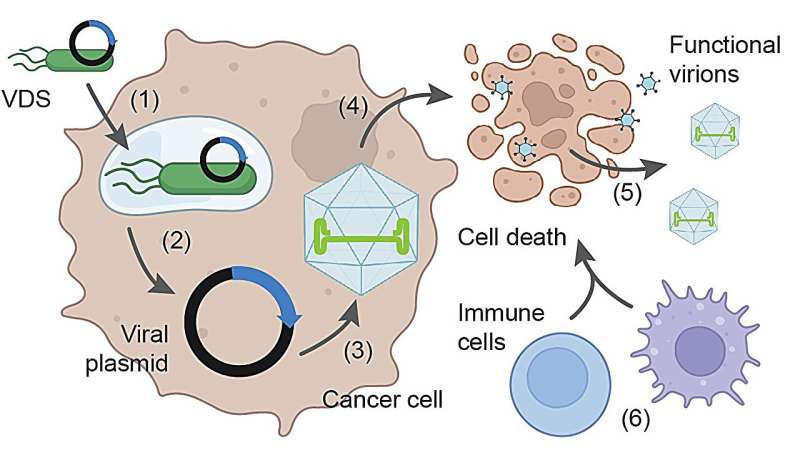
The researchers found that animal models treated with this combination of bacteria and viruses saw almost all their tumors eliminated and lived significantly longer.
“There’s so much more research to be done before this treatment could be available to humans, but the potential of giving years to a liver or pancreatic cancer patient is exciting,” says Neil Forbes, corresponding author and professor in the Riccio College of Engineering at UMass Amherst.
“Our goal is to build therapies that don’t just shrink tumors, but give patients real, lasting time,” says Shradha Khanduja, first author on the paper and UMass chemical engineering Ph.D. candidate.