
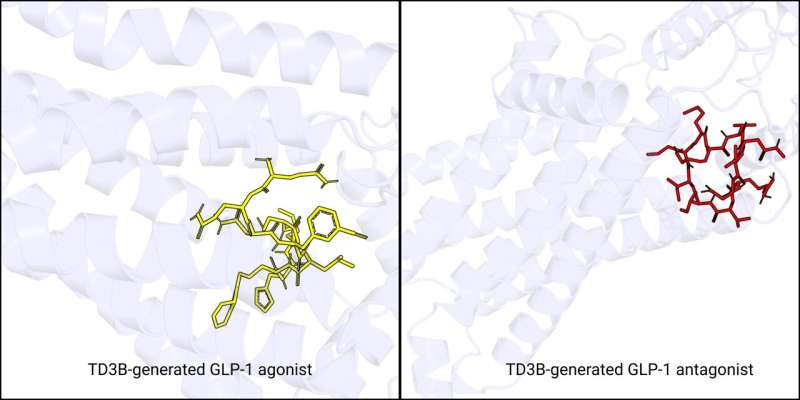
Now, researchers at the University of Pennsylvania and The Chinese University of Hong Kong have created TD3B, an AI framework that guides peptide generation toward candidates predicted to have a desired effect. The results, which focus on GPCRs, are described in a paper presented as a Spotlight at the 2026 International Conference on Machine Learning.
The advance could accelerate drug development by making it easier to design peptide drug candidates likely to have particular effects, such as improving GLP-1-related therapies for weight loss or diabetes, quieting brain signals involved in addiction or helping immune cells fight cancer, rather than generating new candidates first and testing them later to discover what they do.