
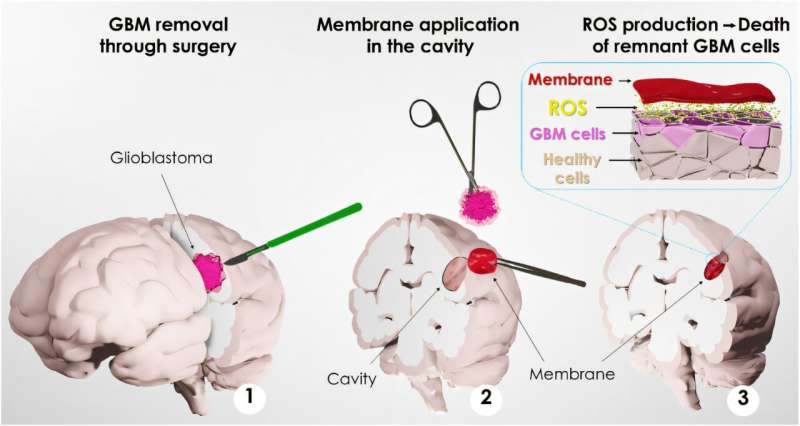
The design of the patches is inspired by the way mussels adhere to rocks (using polyphenol-type molecules), allowing the material to strongly attach to moist brain tissue and enabling sustained release of the drug.
According to the results, among all the tested options, the patch containing catechin—a natural polyphenol found in green tea, cocoa, and some fruits—performed best, eliminating approximately 90% of malignant cells. This highly oxidizing material induces cell death by increasing reactive oxygen species (ROS)