
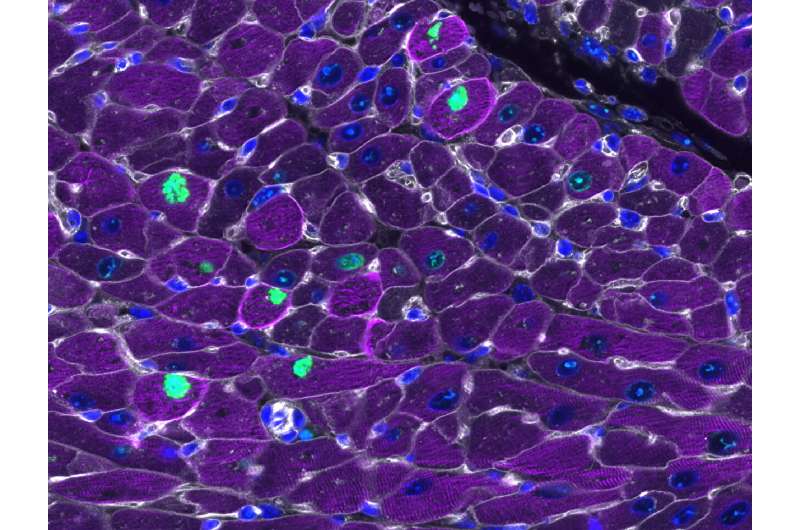
In a study in mice, this produced a stronger heartbeat and increased the amount of blood pumped through the heart with each heartbeat by around 10%, compared with mice that received a mock treatment, following a heart attack.
While this is not a full cure, even small improvements to heart function have been linked to lower mortality in patients and a better ability to carry out daily activities.
The treatment uses mRNA therapy to temporarily activate two proteins inside heart cells, called Myc and Cyclin T1, promoting repair of heart tissue.