
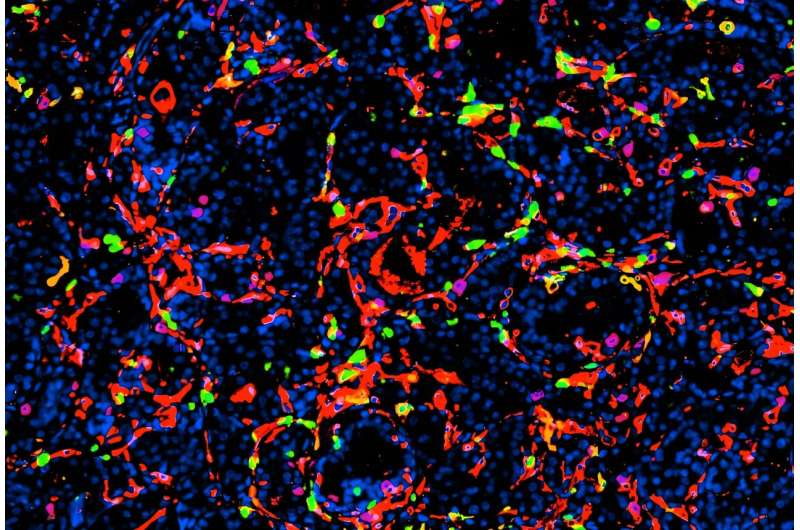
Originally developed for medical imaging applications, these particles, known as ultrasmall fluorescent core-shell silica nanoparticles, or Cornell Prime dots (C’ dots), have progressed into advanced-phase clinical trials for image-guided surgery and therapeutic applications. In recent years, the researchers have found that the C’ dots on their own can exert therapeutic effects against cancer cells while sparing healthy cells.
In the new study, published in Cancer Research, the researchers evaluated the particles’ effects in mouse models of aggressive prostate cancer. They showed that the particles make tumor cells highly susceptible to a powerful self-destruct process and simultaneously convert the normally inactive, “cold” prostate tumor immune microenvironment into a “hot” one featuring strong antitumor immune activity—which can dramatically enhance the effects of other immunotherapies.