
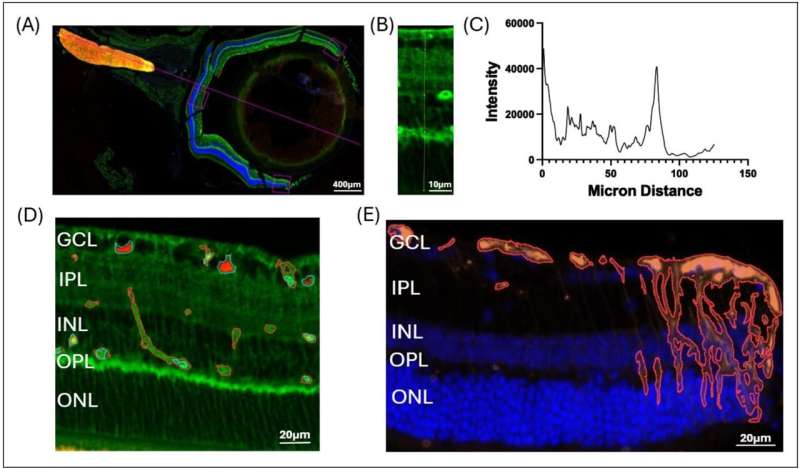
“Retinal Müller glia alterations and their impact on ocular glymphatic clearance in an Alzheimer’s disease mouse model,” is online and will appear in an upcoming edition of the Journal of Alzheimer’s Disease. Led by Stephen Wong, Ph.D., the John S. Dunn Presidential Distinguished Chair in Biomedical Engineering at Houston Methodist and director of T. T. & W. F. Chao Center for BRAIN, the study reveals how the peripheral retina (versus the central retina) could be a window into early diagnosis of AD.
“The eyes are indeed a window into the brain, but our study reveals that we have been looking at the wrong part of the window,” Wong said. “While most clinical eye exams focus on the central retina, the most critical early indicators of AD appear to be hidden at the periphery of the eye. By identifying these retinal changes that occur before the brain’s ‘plumbing’ system fails, doctors may eventually be able to use routine eye exams to catch and treat the disease years before memory loss begins.”