
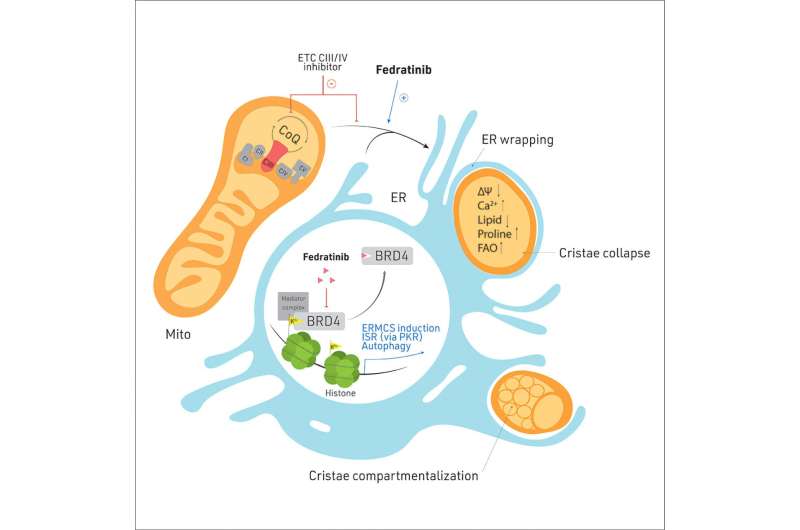
One of the most abundant interactions occurs at the endoplasmic reticulum and mitochondria contact sites, or ERMCS, and dysregulation leads to various diseases, including neurodegeneration, obesity, cancer and diabetes. However, little is known about what drives ERMCS organization.
In a new study, University of Michigan researchers found that the FDA-approved drug fedratinib can lead to ERMCS formation, providing a potential therapeutic avenue. The paper is published in the journal Molecular Cell.
Using human and mouse cell lines, the researchers screened a library of FDA-approved drugs to see which ones can influence ERMCS formation. They found that the anti-cancer drug fedratinib could do so, and this increase was reversible when fedratinib was washed away from the cells.