
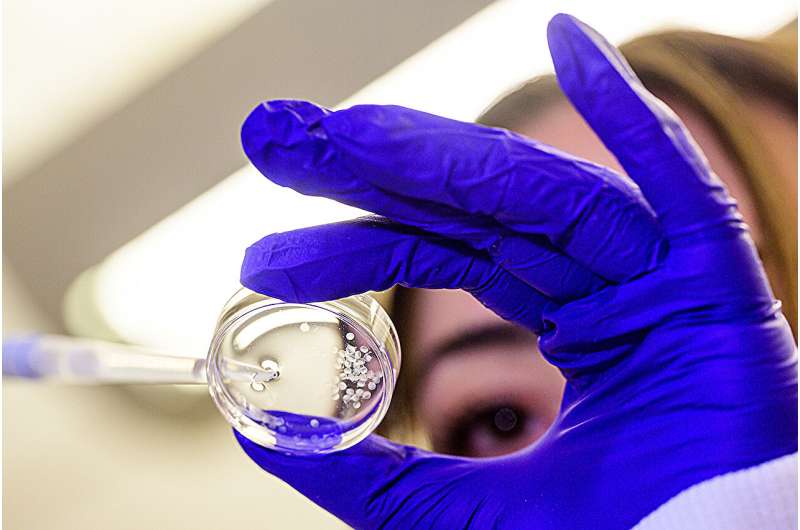
Implantable cytokine factories designed to deliver immunotherapy directly at the site of disease have taken an important step toward clinical reality.
The study, titled “First-In-Human Trial of Encapsulated Cell-Based Protein Producers for Localized IL-2 in Patients with High-Grade Serous Ovarian Carcinoma” and published in Clinical Cancer Research, tested AVB-001, an investigational therapy composed of encapsulated, engineered cells that continuously produce IL-2 within the abdominal cavity. The approach is designed to overcome longstanding challenges associated with systemic IL-2 therapy, including toxicity and short drug half-life.
“Traditional IL-2 therapy has shown potent antitumor activity, but its clinical use has been limited by severe side effects and delivery challenges,” said Omid Veiseh, a professor of bioengineering at Rice and a senior author on the study. “This platform allows us to localize and sustain cytokine exposure directly where tumors reside while minimizing systemic toxicity.”