
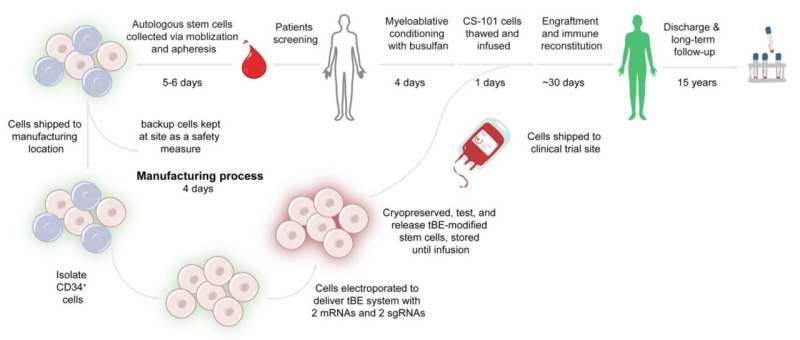
β-Thalassaemia is a blood disease characterized by an inability to correctly synthesize the β-subunit of hemoglobin, which can lead to anemia and defects in the production of red blood cells. The defective subunit synthesis can be caused by more than 350 different known mutations in the β-globin gene (HBB) and is primarily treated by regular red blood cell transfusions, which can be arduous for patients.
Fetal hemoglobin (HbF, which is expressed in fetuses but declines after birth) lacks a β-subunit; thus, increasing its levels may have potential as a long-term treatment for β-thalassaemia. Elevating HbF levels could be achieved through stem cell therapies; however, clinical trials to test this approach have been lacking.