
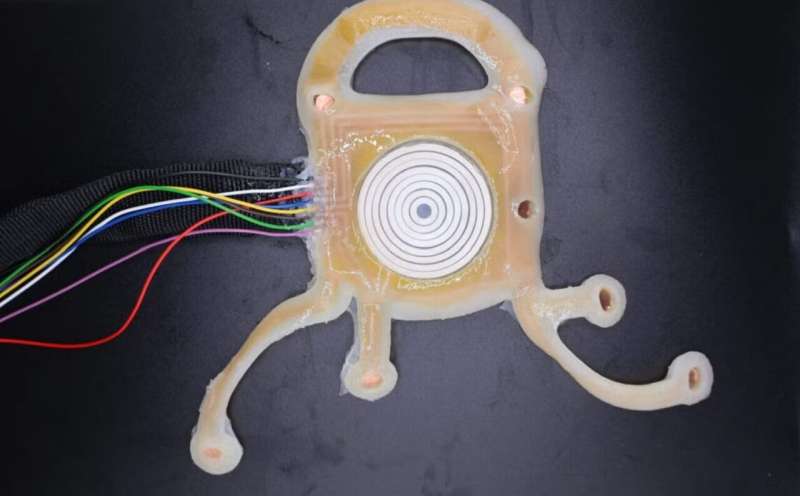
“This is the first time we’ve been able to noninvasively target deep brain regions involved in REM sleep, while simultaneously monitoring brain activity,” said Kai Wing “Kevin” Tang, a recent UT biomedical engineering Ph.D. graduate who led the research effort. “Our skin-attached NEUSLeeP patch opens up new possibilities for understanding sleep and treating sleep disorders in home settings,” added Huiliang “Evan” Wang, assistant professor in the Cockrell School of Engineering’s Department of Biomedical Engineering, who supervised Tang’s work and served as the principal investigator (PI) directing the overall project.
In a study of 28 people, published in Nature Communications, the patch helped participants reach REM sleep 43 minutes faster and stay in it 16 minutes longer on average. The effect held for both healthy sleepers and people with some sleep issues. Participants also said the patch was comfortable and safe, with minimal adverse effects.