
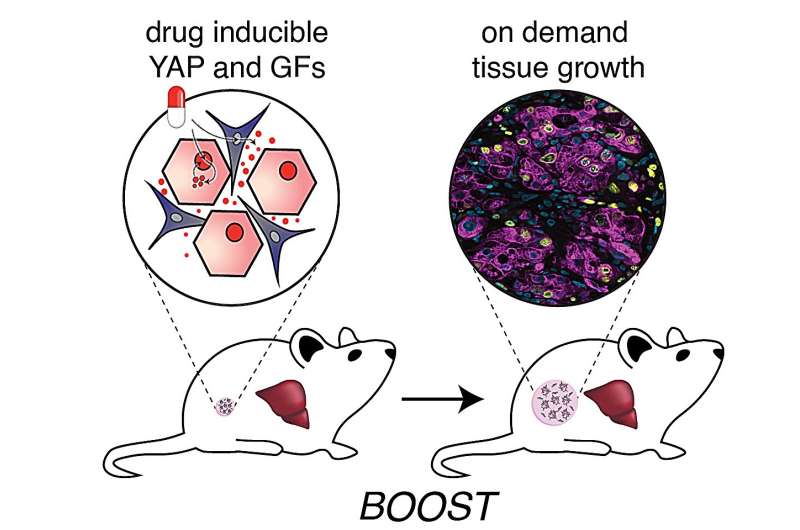
In patients developing end-stage liver disease, the damage has become too severe for the liver’s normally extraordinary regenerative capacity to repair or compensate for it. Once this “point of no return” has been reached, the only option is an organ transplant. However, getting a liver transplant is extremely difficult due to high demand and limited supply—about 9,000 to 10,000 people with liver disease are on the U.S. national transplant list at any given time, and roughly 20% of them become too sick to receive a transplant or die while waiting.
In patients developing end-stage liver disease, the damage has become too severe for the liver’s normally extraordinary regenerative capacity to repair or compensate for it. Once this “point of no return” has been reached, the only option is an organ transplant. However, getting a liver transplant is extremely difficult due to high demand and limited supply—about 9,000 to 10,000 people with liver disease are on the U.S. national transplant list at any given time, and roughly 20% of them become too sick to receive a transplant or die while waiting.