
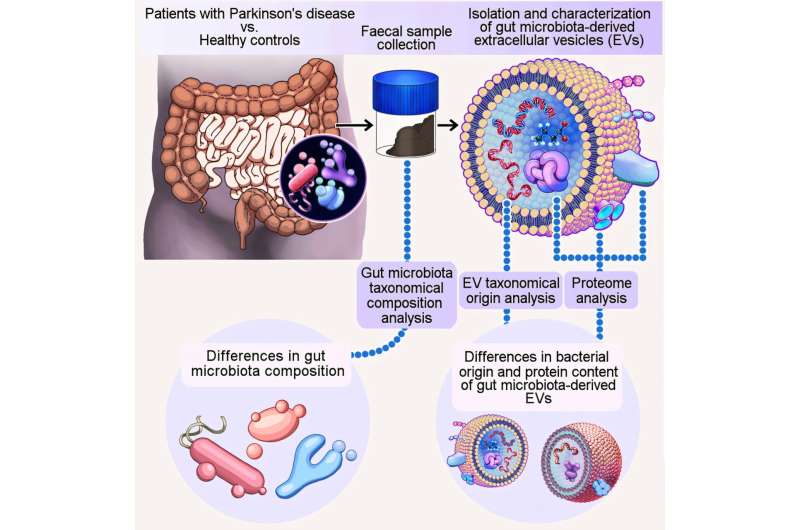
Rather than looking only at which bacteria are present in the gut, the researchers focused on the biological messages they send. Gut bacteria release extracellular vesicles, tiny particles that carry proteins and other molecules and can travel between cells, likely extending microbial signaling beyond the gut.
The study, published in iScience, found that people with Parkinson’s disease had more of these vesicles in their stool samples than healthy individuals. The vesicles were also larger on average and carried a different mix of bacterial proteins, suggesting that microbial communication may be altered in the disease.