
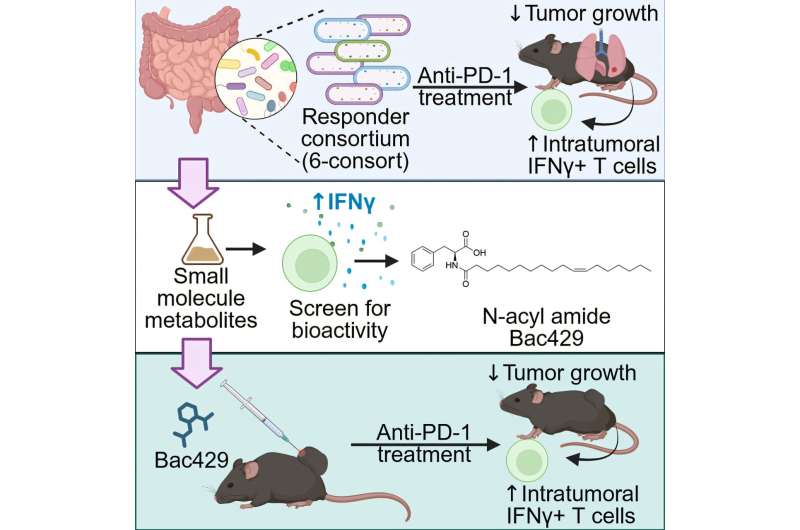
The findings, published in Cell Reports Medicine, could have widespread clinical impact as a combination therapy with commonly used immunotherapy treatments like immune checkpoint inhibitors, which release the brakes on a patient’s own immune system to target their cancer.
“Across all cancers, only about 20% of patients who receive immune checkpoint inhibitors respond to them—80% do not—so anything that could boost responsiveness is a blockbuster drug,” said Rachel Newsome, Ph.D., a postdoctoral associate in the lab of Christian Jobin, Ph.D., and the study’s first author.
“We envision this small molecule drug could be given at the same time or before immune checkpoint therapy and boost patient responsiveness by 50% without adding any invasive treatment. Our goal is to naturally boost the activity of immunotherapy, so more people have a positive effect from treatment. We want to empty those cancer center parking lots that are so full right now.”