
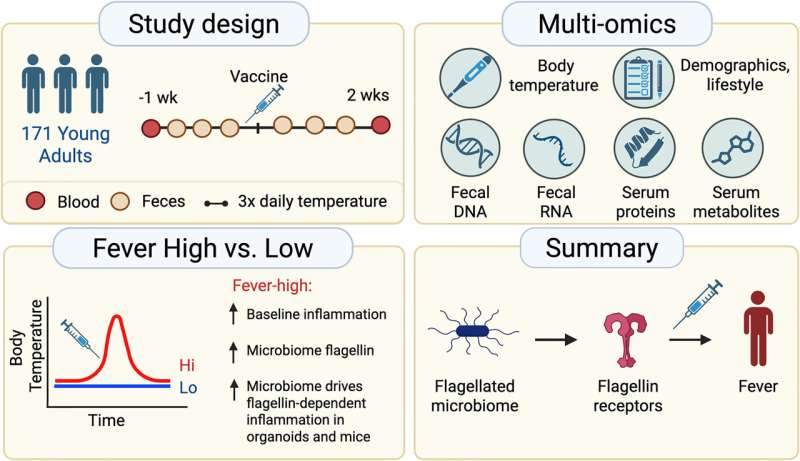
The risk of side effects like fever can make people hesitant to be vaccinated, potentially reducing vaccination rates and increasing the risk of preventable illness and death. Fever reflects an inflammatory immune response; currently, however, it isn’t clear why only some people experience fever after vaccines.
Researchers at the Max Planck Institute for Biology Tübingen, Georgia State University, Institut Pasteur in Paris, the French National Institute for Health and Medical Research (Inserm), the University of Manitoba, the University of California San Diego and the Institute for Tropical Medicine at the University of Tübingen have now shown that one source of the variation in immune response may be the gut microbiome.