
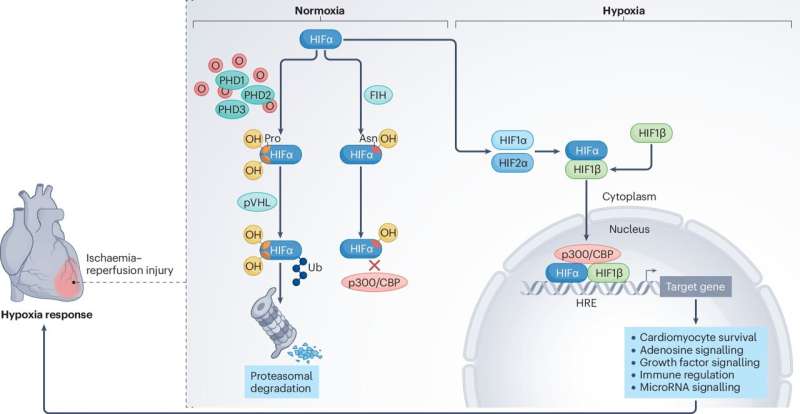
Published recently in Nature Reviews Cardiology, the review, led by corresponding author Holger Eltzschig, professor and John P. and Kathrine G. McGovern Distinguished University Chair in the Department of Anesthesiology, Critical Care, and Pain Medicine at McGovern Medical School at UTHealth Houston, focuses on proteins called hypoxia-inducible factors, or HIFs, which act as the body’s oxygen sensors.
Low oxygen triggers protective genes
When oxygen levels drop, such as during a heart attack, HIFs switch on a network of protective genes that help cells survive. These genes allow the heart to adapt to low-oxygen conditions by changing how it produces energy, reducing stress on cells and activating other protective pathways.