
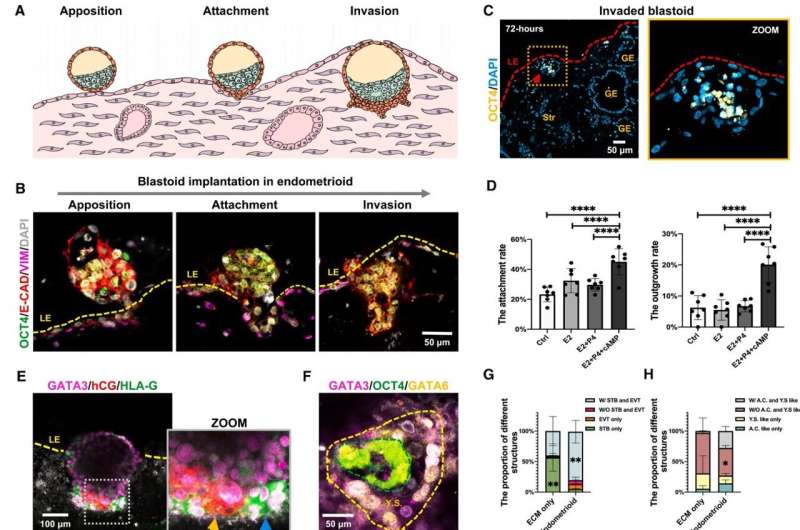
Embryo implantation is a critical process that takes place five to seven days after fertilization. However, if an embryo cannot find a place to attach itself and settle in the uterine lining, a successful pregnancy cannot happen.
IVF issues
Many couples undergoing IVF often experience Recurrent Implantation Failure (RIF), where a healthy embryo is unable to implant for reasons that are not always clear. But for a host of ethical and practical reasons, researchers cannot simply look inside a living human uterus to see what is going wrong. And existing lab models do not fully replicate the three-dimensional structure and function of the womb.
So researchers from the Chinese Academy of Sciences developed a 3D in-chip implantation model of the human endometrium, the tissue that lines the uterus.
They describe their work in a paper published in the journal Cell.