
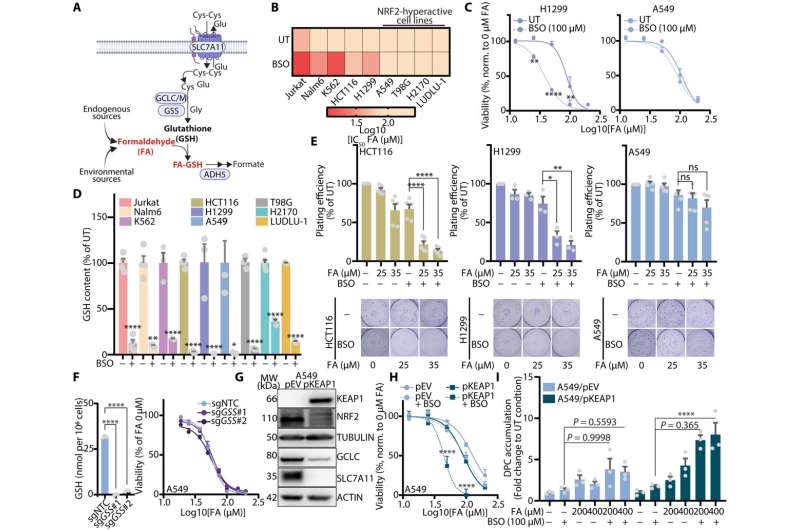
Formaldehyde is produced naturally inside cells and can damage DNA by binding it to nearby proteins. Cells neutralize it using glutathione, a molecule that protects against chemical damage. Glutathione also prevents ferroptosis, a form of cell death caused by damage to fats in the cell membrane. Both tasks depend on the same supply of glutathione, so using it to deal with formaldehyde can leave less available for the other task. The study explains how cancer cells can maintain both defenses.
The research, led by Lucas Pontel’s group at the Josep Carreras Leukaemia Research Institute, focused on a protein called NRF2. Often overactive in tumors, NRF2 controls a process that helps cancer cells neutralize formaldehyde while preserving their glutathione supply.