
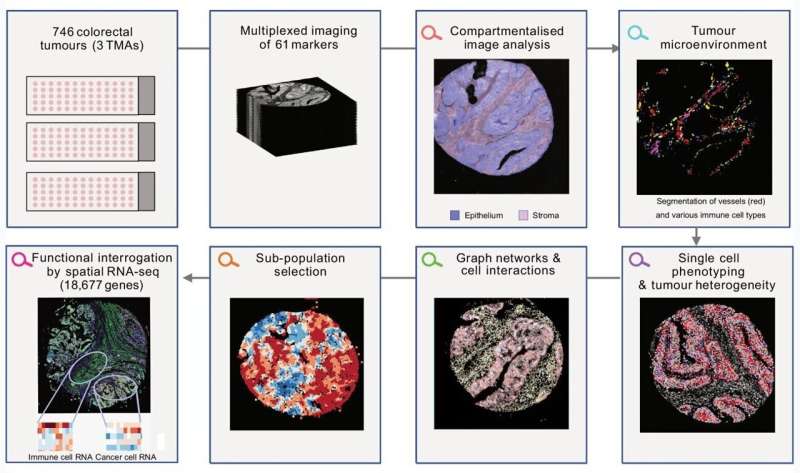
Mechanistic target of rapamycin, or mTOR, is a protein that plays an important role in cell signaling—a system of molecular messages that allows cells to regulate various biological functions. mTOR helps cells respond to nutrients and environmental conditions and influences growth, proliferation and immune activity. Because cancer cells often depend on these processes to grow and divide, mTOR signaling is a common feature in many cancers.
“Our findings show that mTOR signaling can have very different effects depending on which cells it is active in. In colorectal cancer, we found that activity in immune cells was associated with a stronger immune response and better patient survival, highlighting the importance of understanding signaling within the wider tumor environment,” said Dr. Heba Sailem, reader in computational pathology, King’s College London.