
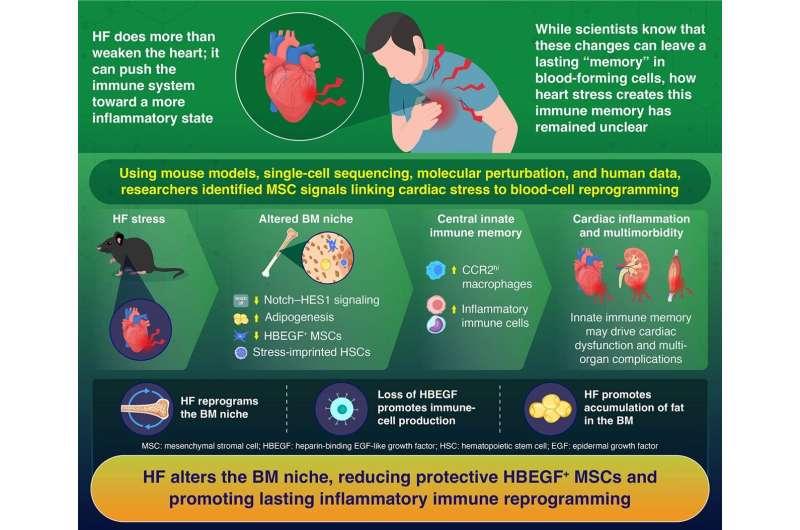
A research team including Professor Katsuhito Fujiu from the Department of Integrative Physiology, Institute of Science Tokyo (Science Tokyo), Japan; Professor Ichiro Manabe from the Department of Systems Medicine, Graduate School of Medicine, Chiba University, Japan, and others set out to fill this knowledge gap.
They examined two important BM cell populations in mouse models: mesenchymal stromal cells (MSCs), which support blood cell development, and hematopoietic stem/progenitor cells (HSPCs), which synthesize blood and immune cells. The researchers investigated how interactions between these cells change during HF and contribute to lasting immune alterations.