
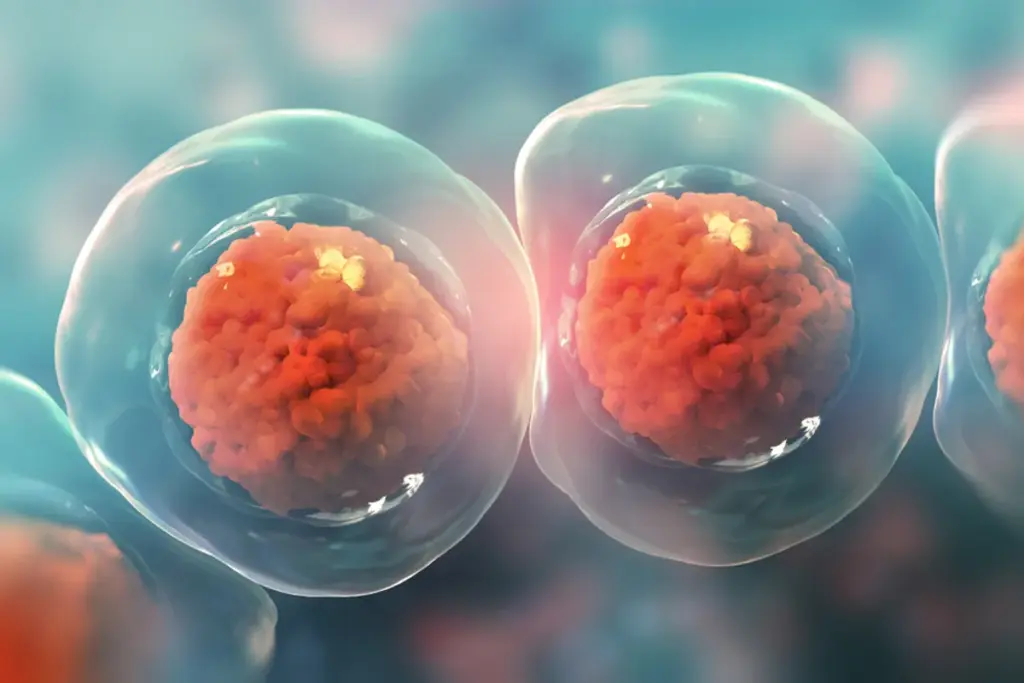
When cells in our body are going through a rough patch due to radiation or botched attempts to divide, they sometimes link up with other cells to safely hand over their DNA. This process of DNA transfer — supported by tiny tubes that form between two cells, passing DNA from one to the other — has been observed for the first time in human cells, and this discovery may very well change how we think about our cells.
A new study published in Cell found that human cells are capable of responding to genomic instability by relocating pieces of DNA to other nearby cells. When this happens, two cells connect by way of nanotubes that act like chutes, delivering DNA that remains active. Researchers are now looking into how this transfer mechanism plays a role in human health, especially cancer development.