
A healthy human liver can perform more than 500 functions essential to keeping our bodies healthy. These include detoxifying harmful substances, helping regulate metabolism, aiding digestion, storing nutrients, producing blood clotting proteins, and assisting in resisting infections.
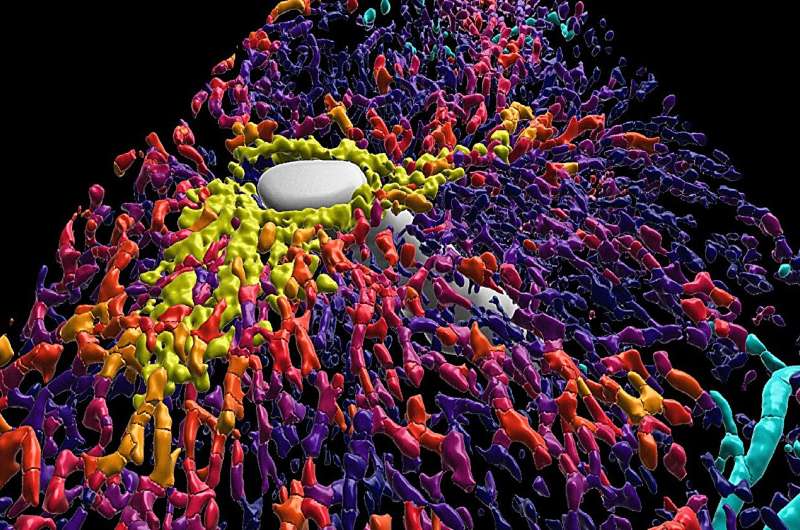
The reconstructions also reveal how cirrhosis—extensive scarring of the liver—rearranges its intricate architecture and thereby alters biological activities inside the organ.
The project researchers refer to their method as the Liver Map pipeline, which they describe in a paper in Science Advances. Additional implementations of their approach might suggest better ways to treat cirrhosis to protect or restore the liver.