
While animal models have led to key advances in understanding metastasis-related mechanisms, the persistent clinical failures of drugs targeting metastatic progression suggest that the differences between human and rodent biology cannot be discounted.
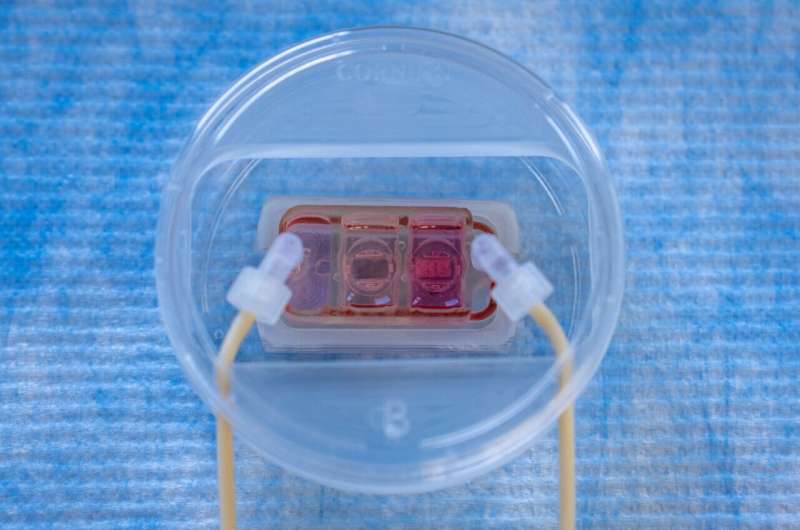
In a study published in Science Translational Medicine, Columbia Engineering professor Gordana Vunjak-Novakovic and her team report developing a multi-organ chip that mimics how cancer cells spread through vascular flow to distant organs, the first model of cancer metastasis of its kind.
The chip includes compartments with millimeter-sized engineered human bone and lung tissues, and vascular flow containing circulating breast cancer cells that allows dynamic crosstalk among the tissues being colonized.