
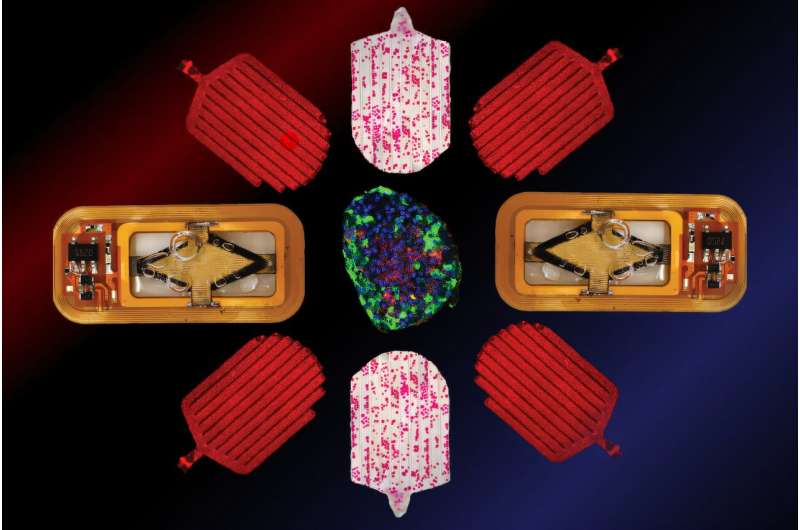
Most diabetes patients must carefully monitor their blood sugar levels and inject insulin multiple times per day, to help keep their blood sugar from getting too high. As a possible alternative to those injections, MIT researchers are developing an implantable device that contains insulin-producing cells. The device encapsulates the cells, protecting them from immune rejection, and it also carries an onboard oxygen generator to keep the cells healthy.
This device, the researchers hope, could offer a way to achieve long-term control of type 1 diabetes. In a new study, they showed that these encapsulated pancreatic islet cells could survive in the body for at least 90 days. In mice that received the implants, the cells remained functional and produced enough insulin to control the animals’ blood sugar levels.