
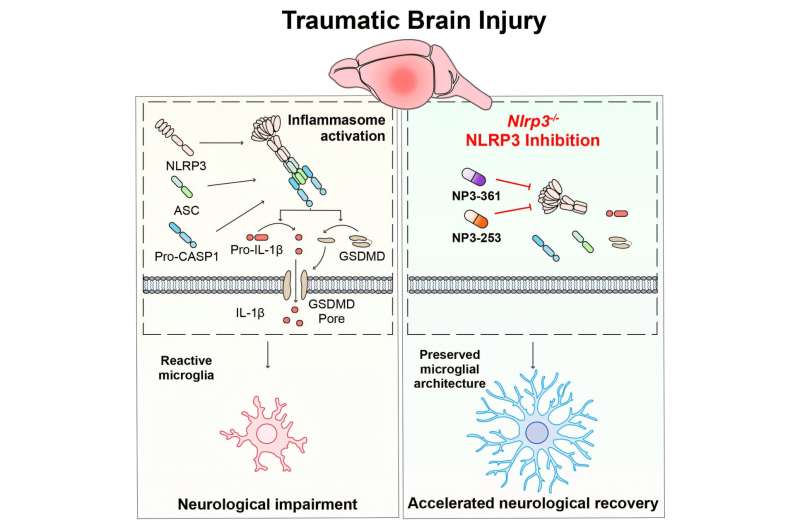
In the absence of the gene encoding NLRP3, brain tissue loss was reduced and neurological recovery was faster. Microglia also retained more of the finely branched structure characteristic of their uninjured state. Aggregates of the protein ASC, which contributes to inflammasome assembly, were also reduced. The study is published in the journal Cell Reports Medicine.
“Our findings identify NLRP3 as a central driver of post-traumatic neuroinflammation,” said Castro-Gomez. “Sustained, selective inhibition could help limit secondary brain damage and improve recovery after traumatic brain injury.” Castro-Gomez is a neuroscience clinician scientist at UKB’s Center for Neurology and a member of the ImmunoSensation3 Cluster of Excellence and the University of Bonn’s Transdisciplinary Research Area (TRA) “Life and Health.”