
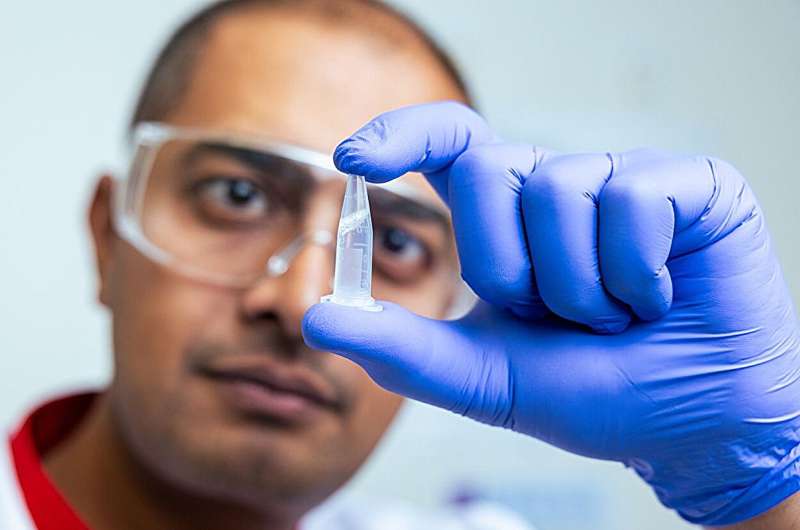
Rebuilding damaged human tissue requires a steady supply of oxygen and nutrients, yet engineering functional networks of tiny blood vessels remains one of the grandest challenges in regenerative medicine. Rising to meet the challenge, Kumar is investigating whether the gel can help regenerate heart tissue damaged by a heart attack and regenerate dental pulp, potentially offering an alternative approach to root canal treatment.
The injectable material is made from peptides—short chains of amino acids designed by scientists—that assemble into a gel. One provides the signal that encourages blood-vessel growth, while the other gives the gel strength and structure. Scientists have explored growth factors, genes, RNA and stem cells to encourage blood vessel growth. But these approaches face challenges, including keeping therapeutic signals where they are needed and preventing them from breaking down, requiring complicated treatments.