
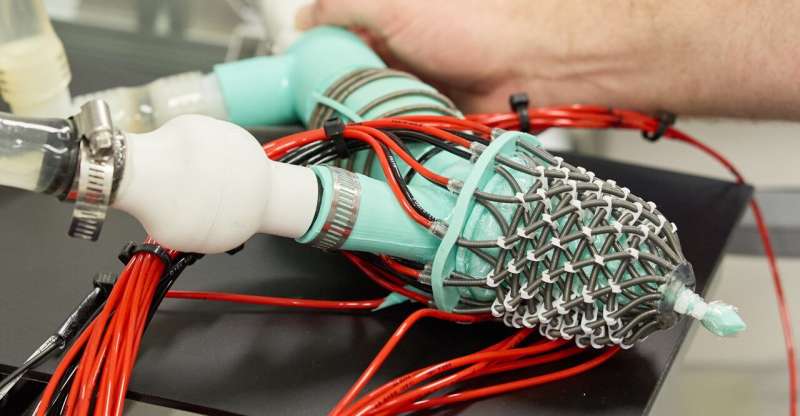
Published in Nature Communications and Advanced Science, the research introduces a beating model of the left side of the heart that includes artificial valves, papillary muscles and chordae tendineae—structures that are critical to healthy heart function and are frequently affected by disease.
The device is able to accurately reproduce the process in a real heart in which cardiac valves leak and blood flows backward, increasing the risk of heart failure and other life-threatening complications.
In that way, the research team says the new soft robot can eventually help provide a better understanding of heart conditions, reduce reliance on animal testing and provide doctors with patient-specific models to plan treatments before procedures are performed.