
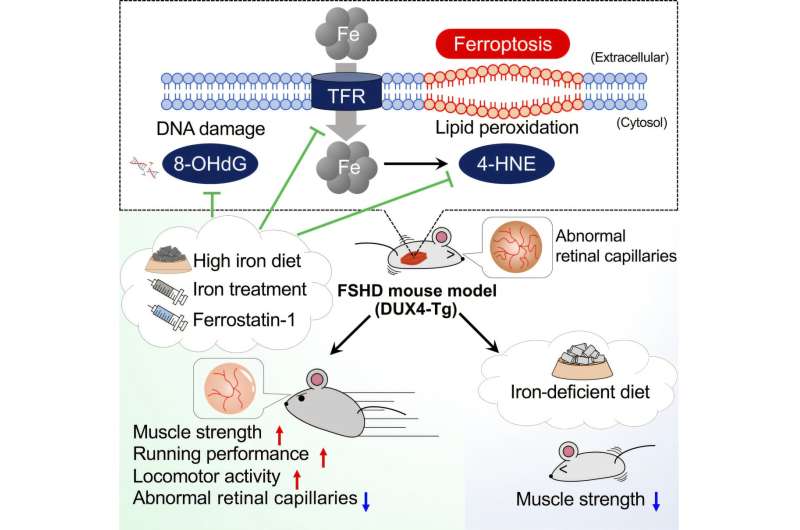
FSHD is characterized by progressive muscle weakness that typically begins in the face and shoulders and gradually spreads to the upper arms and lower limbs. The disease is caused by aberrant expression of the toxic transcription factor DUX4 in skeletal muscle, which induces oxidative stress, inflammation, and muscle degeneration.
Although DUX4 is widely recognized as a central therapeutic target, the molecular processes that translate DUX4 expression into muscle damage remain incompletely understood.
In the new study, the research team focused on iron metabolism, a critical regulator of oxidative stress. Using a genetically engineered mouse model that conditionally expresses DUX4 in skeletal muscle, the researchers found that DUX4 disrupted intracellular iron homeostasis, leading to iron accumulation in muscle tissue.